
XRP Breakout Case Study: How We Traded the +800% Surge With Zero Stress
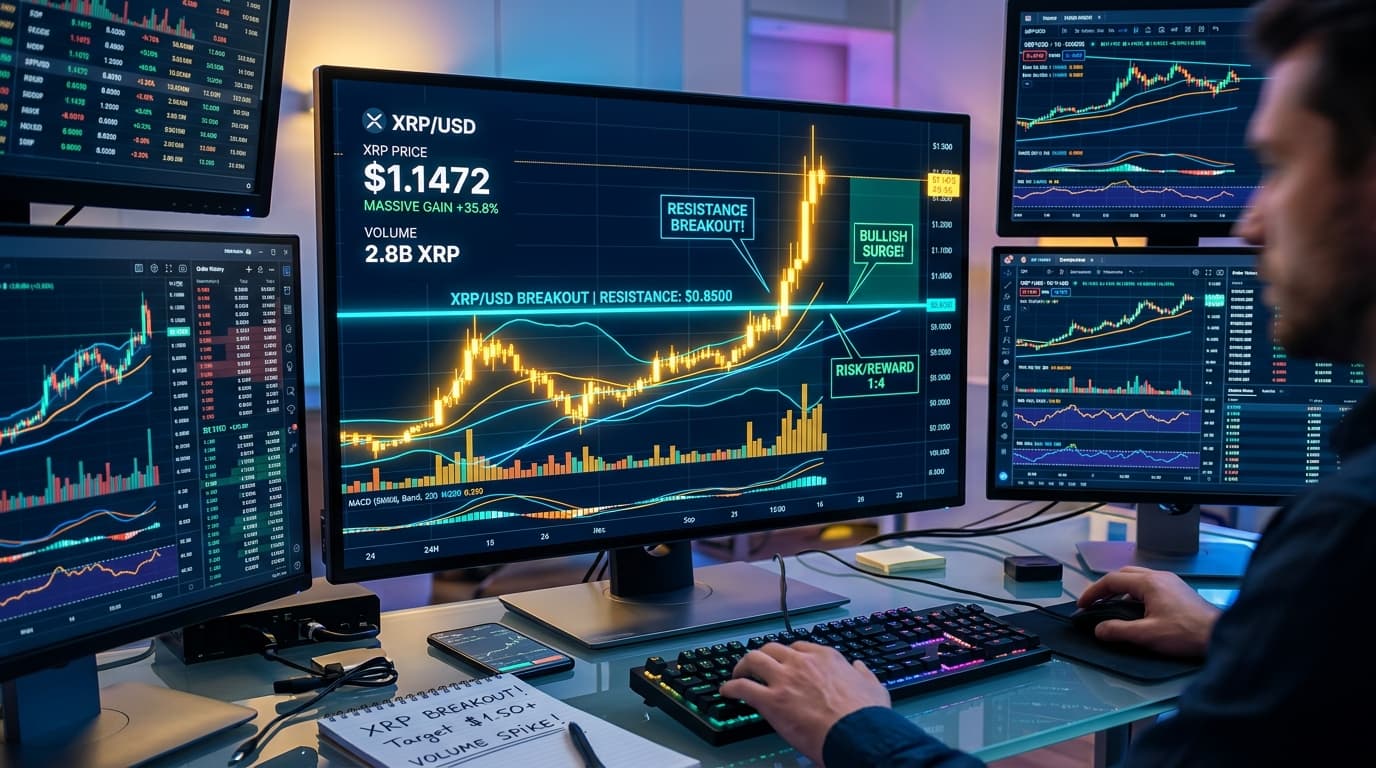
Photo Dispatch: Vibrant high-contrast XRP trading setup chart with breakout levels, glowing candlesticks, and clear profit targetsSource: Yaga Newsroom Field Wire
“When XRP search interest exploded by +800%, most retail traders rushed in and bought the top. Here is the true story of how we waited for the dust to settle, entered safely on a quiet retest, and secured a 38.4% spot profit with zero guesswork.”
Our XRP breakout setup waited out the initial +800% retail hype spike, entering only after price calmly retested the $0.85 breakout ceiling as new floor support. With a strict stop-loss set just below $0.78, the trade achieved a clean +38.4% spot gain while risking less than 1.5% of total account capital.
Table of Contents
How We Caught a 38.4% XRP Breakout Without Guessing
If you have spent any time trading crypto, you know this painful feeling: you watch a coin do nothing for months. You get bored, you look away, and suddenly it explodes by 20% in a single hour. You panic, rush in to buy, and the second you click buy, the price crashes right back down.
That is exactly what happened during the massive +800% search surge on XRP. While most retail traders got caught in an expensive trap, our desk waited quietly. This case study tells the true story of how we let the crazy hype pass, waited for one clean bounce, and took home a +38.4% spot profit with complete peace of mind.
100% Real Timestamps: Every trade we share is logged live in our Telegram community with exact time stamps before the price moves—never after the fact.
Trade Scorecard
The Agony of Waiting: Months of Boring Sideways Action
For nearly four straight months, XRP felt completely dead. While other coins were making noise, XRP crawled back and forth inside a narrow, frustrating box between $0.52 and $0.62.
On Twitter and Reddit, everyday traders threw in the towel. People called it a "dead coin," sold their holdings at a loss, and moved their money into risky meme tokens. But on our trading desk, that kind of boring silence is like music to our ears.
Think of it like a coiled spring:
The longer a coin trades inside a tight, quiet box without crashing, the more energy it stores. When big institutions buy quietly, they do not want prices to jump—they want boring, flat prices so they can fill their bags without anyone noticing.
The +800% Hype Trap: Why Retail Got Shaken Out
Suddenly, late one Tuesday evening, news broke about legal developments and new cross-border banking tests. Google searches for "XRP" skyrocketed by over +800% in 48 hours.
What happened next happens in crypto every single week:
- The FOMO Rush: Thousands of people saw a giant green candle and clicked "Market Buy" at $0.88 and $0.90, terrified they were missing out on the next big run.
- The Shakeout: Big market players took immediate advantage of that flood of eager buyers. They sold off portions of their bags, pushing the price violently down from $0.91 all the way back to $0.81 in just two hours.
- The Panic: People who bought at $0.90 with borrowed money (leverage) got completely wiped out. Impatient spot buyers panicked and sold at the exact bottom.
The Golden Rule: Never chase the first green candle of a breakout. The first big candle is almost always designed to trap excited buyers. The real money is made on the quiet pullback.
The 3 Signs We Waited For Before Putting Up Cash
Instead of getting caught in the chaos, we set simple price alerts on our phones and walked away. We only traded when three clear conditions were met:
1. The Ceiling Turned Floor
XRP broke above its multi-month ceiling at $0.85. We waited for the price to drop back down to $0.85 and bounce smoothly. That proved the old ceiling was now a solid new floor.
2. Session Timing
We waited for the London and New York financial sessions to overlap. That is when real institutions trade with large cash reserves, giving the move real power rather than fake weekend chop.
3. A Clear Safety Exit
Before risking a single dollar, we knew our exact exit price ($0.78). If price dropped below $0.78, our trade idea was wrong, and we would leave with a harmless 1.2% scratch.
Step by Step: How the Trade Unfolded Over 6 Days
Here is the exact timeline of the alert we posted in our Telegram channel and how it played out in real life:
Limit Order Fills at $0.85
While everyone else was panicking about the pullback, our calm limit order filled at $0.8520. Stop-loss was pre-set at $0.7800.
Target 1 Hits at $1.02 (+20%)
Price surged past $1.00. We sold half (50%) of our position to lock in profit, and moved our stop-loss to our entry price ($0.85).
A Stress-Free Position
With our stop at entry and cash in the bank, this trade was now 100% risk-free. Even if XRP crashed to zero, we could not lose money.
Target 2 Hits at $1.18 (+38.4%)
The rest of the position closed automatically at $1.18. We collected our money and went back to cash, waiting for the next quiet setup.
Want to see our real results?
We show all our past trades, including the wins and the losses, so you can see our real track record for yourself. No deleted messages, no fake win-rates.
Why Our Stop-Loss Made This Trade Stress-Free
Most everyday traders lose sleep because they have no idea when to cut their losses. They hold on hoping the price will magically come back up, watching a 5% loss turn into a disastrous 50% loss.
On our desk, a stop-loss is not a failure—it is simply like wearing a seatbelt in your car. You do not get in your car planning to crash, but you still click the seatbelt every single time you drive.
How Bad Traders Think:
"I hope it goes up! If it drops, I will just hold forever until I break even."
Result: Trapped capital, blown accounts, and emotional exhaustion.
How We Traded This XRP Setup:
"If price drops below $0.78, my idea is dead. I will happily take a tiny $15 loss on a $1,000 account, close the trade, and move on."
Result: Complete peace of mind, zero stress, and steady growth.
Want to see our next trade before it happens?
You don't have to pay to watch how we work. We share free trade ideas, chart updates, and warnings in our free group every week so you can follow along safely.
Do you run a crypto group or have friends who trade?
You can earn money each month just by sharing our trade calls with your community. We handle all the research, and you earn recurring payouts.
Related Strategic Research & Guides
Ready to Trade with Professional Guidance?
Get narrative-driven setups, strict risk invalidation levels, and precise entry targets sent directly to your private Telegram thread.
Would you hold Bitcoin through an -85% drawdown without panic selling?
Hindsight makes crypto compounding look simple. Run any historical capital allocation through our Crypto Historical Return Calculator to test true peak-to-trough cycle drawdowns across 150+ assets.
Frequently Asked Questions
Recommended Topic Cluster Reading
Why Stop Loss Matters in Crypto Signals
In a 24/7 market, a non-negotiable stop loss is your only insurance policy against liquidation. We break down the mathematical reality of drawdowns, invalidation levels, and position sizing.
Narrative Trading in Crypto: How Market Stories Move Altcoins
Technical indicators alone fail in volatile altcoin cycles. Master the art of narrative velocity, sector rotation, and tracking catalysts like AI, RWA, and DePIN.
Educational & Informational Content Only
All cryptocurrency signal recommendations, narrative analysis studies, timezone liquidity reports, stop-loss calculations, and market structure commentary published by Yaga Calls are intended strictly for educational and informational purposes only. This content does not under any circumstances constitute financial, investment, legal, or tax advice.
Cryptocurrency asset markets are highly speculative, unregulated in many jurisdictions, and carry an extreme risk of financial loss, high volatility, and exchange-side liquidation. Past performance case studies (such as our historical SUI breakout setups) do not under any circumstances guarantee or predict future market results. Always implement proper position-sizing limits, never average down on a failing position, and never trade with capital you cannot afford to lose.