
Why Stop Loss Matters in Crypto Signals
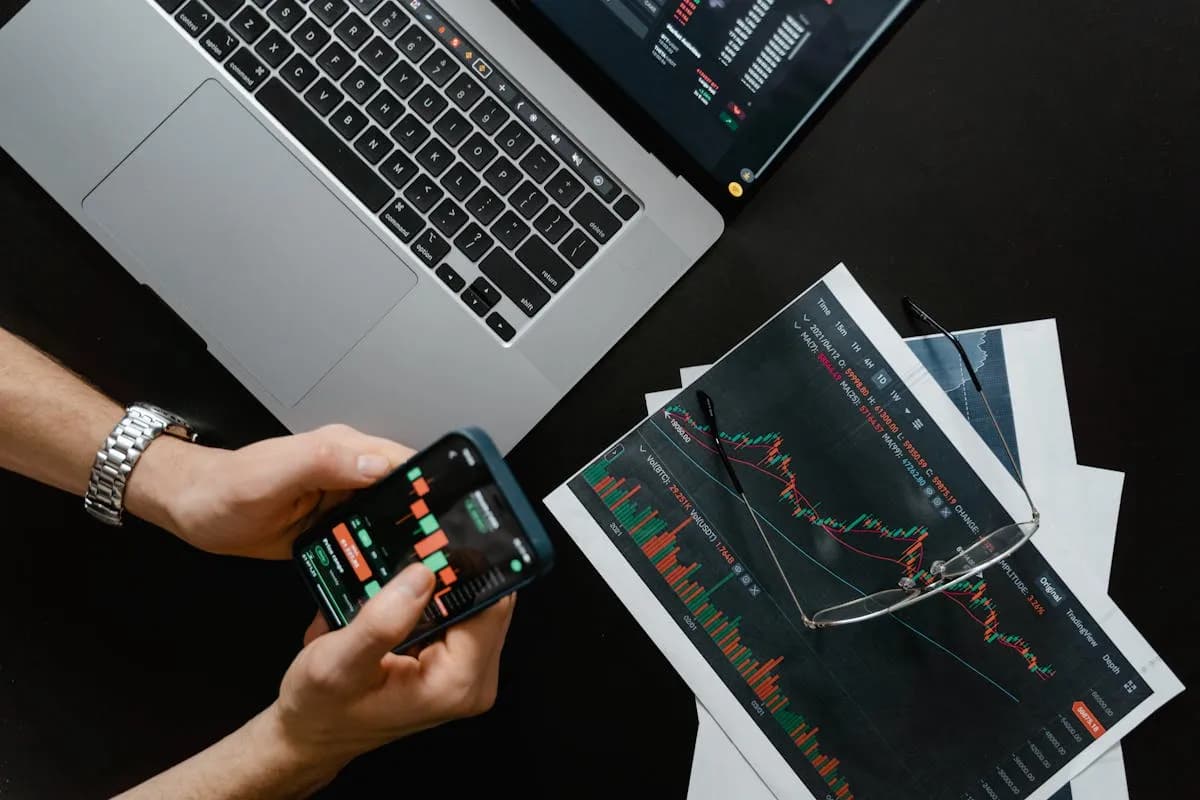
Photo Dispatch: A financial chart illustrating a protective stop-loss level invalidating a trade to preserve capital from a sudden market drawdownSource: Yaga Newsroom Field Wire
“In a 24/7 market, a non-negotiable stop loss is your only insurance policy against liquidation. We break down the mathematical reality of drawdowns, invalidation levels, and position sizing.”
Table of Contents
Capital Preservation as a Non-Negotiable Strategy
In the high-energy world of cryptocurrency swing trading, retail participants focus almost entirely on one variable: potential profit. But professional market participants understand a harder truth: survival is the first and most critical step to profitability. In a 24/7 market that operates without traditional exchange-side trading halts, a protective, non-negotiable stop-loss is your only defense against sudden market liquidations.
The Protective Rule: A stop-loss completely removes human emotion, hope, and hesitation from the exit execution process, automating your downside parameters.
Drawdown Protection Check
The Exponential Recovery Math Matrix
When you lose capital, the percentage gain required to recover to your original starting balance does not increase linearly—it increases exponentially. Look at the stark mathematical reality:
| Account Drawdown | Gain Required to Break Even | The Professional Assessment |
|---|---|---|
| 5% Loss | 5.3% Gain | Negligible impact. Easily recovered in a single standard swing setup. |
| 10% Loss | 11.1% Gain | Standard operational drawdown. Fully recovered within 1 to 2 clean trades. |
| 20% Loss | 25% Gain | Requires a significant string of high-conviction setups to rebuild balance. |
| 50% Loss | 100% Gain | Extreme damage. Requires doubling your remaining portfolio just to get back to zero. |
| 80% Loss | 400% Gain | Catastrophic ruin. Mathematically impossible to recover under standard risk rules. |
As this table clearly demonstrates, if you use a strict stop-loss and limit your trade risk to 1.5%, a string of three consecutive stopped-out trades only draws down your account by 4.5%. Rebounds to break-even require a minor 4.7% gain. But if you ignore your stop-loss and allow a single bad trade to run until your account is down 50%, you now require a massive 100% gain just to get back to your starting point.
Whipsaw vs. Logical Technical Invalidation
Setting stop-losses requires understanding technical invalidation zones rather than using random dollar figures.
Whipsaw & Panic Selling
Arbitrary Percentages
Placing a stop-loss at a random level (e.g. exactly 2% below your entry) without looking at structural support blocks.
Sweeping Liquidity pools
Admins placing stop-losses inside active consolidation ranges where market makers sweep orders before major runs.
Arbitrary Exit Panic
Selling manually in a panic during a standard volatility dip, right before the price rebounds back to targets.
Logical Invalidation
Structural Boundaries
Placing stop-losses just below the key structural support levels or range low boundaries where the trade thesis is invalid.
Breakout Support Tests
Validating that the former resistance successfully retests as new support, defining the strict invalidation boundary.
Disciplined System exit
Letting the exchange automatically execute the stop-loss order to guarantee disciplined capital protection.
Your Preservation Protocol: 4 Steps to Risk Containment
Define the logical structural boundaries
Before entering any trade, identify the precise range high or support level where your breakout thesis is mathematically false.
Set limit orders inside entry zones
Avoid chasing breakout peaks. Set limit orders systematically within designated ranges to maintain tight stop-loss distances.
Calculate the exact Position sizing
Ensure the distance to your stop-loss matches your allowed dollar risk, keeping portfolio exposure restricted to 1-1.5% per trade.
Adjust stop-losses to break-even
Once the price reaches your first take-profit target, sell 50% of your position and move your stop-loss order to your entry price.
Related Strategic Research & Guides
Ready to Trade with Professional Guidance?
Get narrative-driven setups, strict risk invalidation levels, and precise entry targets sent directly to your private Telegram thread.
Would you hold Bitcoin through an -85% drawdown without panic selling?
Hindsight makes crypto compounding look simple. Run any historical capital allocation through our Crypto Historical Return Calculator to test true peak-to-trough cycle drawdowns across 150+ assets.
Frequently Asked Questions
Recommended Topic Cluster Reading

Telegram Crypto Signals: What Makes a Group Trustworthy?
Telegram is the undisputed epicenter of global crypto trading, but it is also filled with copycat channels and fake win-rate claims. Learn the step-by-step verification checklist to audit a premium group before risking capital.

Crypto Signals for Beginners: A Practical Guide
A beginner's guide to using crypto trade signals. Learn the exact meaning of entry zones, invalidation parameters, position sizing, and how to avoid emotional mistakes.
Educational & Informational Content Only
All cryptocurrency signal recommendations, narrative analysis studies, timezone liquidity reports, stop-loss calculations, and market structure commentary published by Yaga Calls are intended strictly for educational and informational purposes only. This content does not under any circumstances constitute financial, investment, legal, or tax advice.
Cryptocurrency asset markets are highly speculative, unregulated in many jurisdictions, and carry an extreme risk of financial loss, high volatility, and exchange-side liquidation. Past performance case studies (such as our historical SUI breakout setups) do not under any circumstances guarantee or predict future market results. Always implement proper position-sizing limits, never average down on a failing position, and never trade with capital you cannot afford to lose.